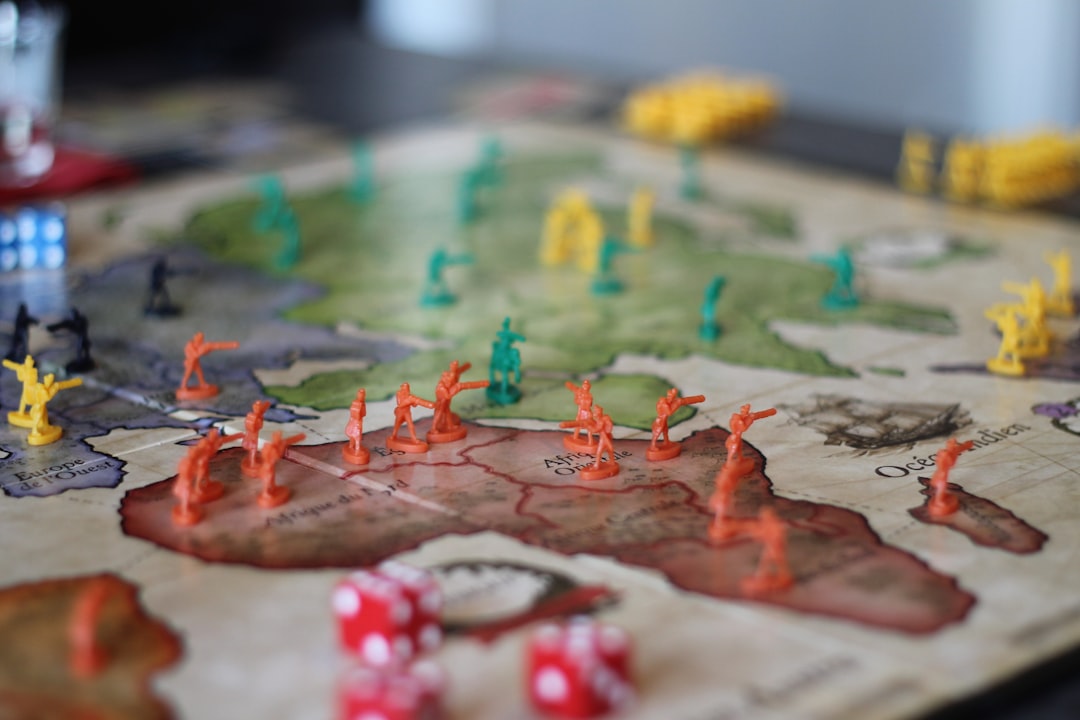
Strategic thinking represents a crucial skill set in both personal and professional contexts. The ability to plan ahead, anticipate consequences, and make tactical decisions separates effective leaders and problem-solvers from those who merely react to circumstances. Game-based learning offers a unique environment for developing these strategic capabilities through engaging, risk-free practice that translates directly to real-world applications.
What Defines Strategic Thinking
Strategic thinking involves analyzing complex situations, identifying long-term goals, and developing action plans that account for multiple variables and potential outcomes. Unlike reactive problem-solving, strategic thinking is proactive and forward-looking. It requires balancing immediate needs with future objectives, managing resources efficiently, and adapting plans as circumstances change.
In gaming contexts, strategic thinking manifests through gameplay that requires planning multiple moves ahead, managing limited resources, anticipating opponent actions, and adjusting strategies based on evolving game states. These same cognitive processes apply directly to business planning, project management, and personal goal achievement.
How Games Create Strategic Learning Environments
Games provide ideal environments for strategic skill development because they create consequence-rich scenarios without real-world risks. You can experiment with different strategies, experience the outcomes of your decisions, and learn from mistakes without suffering actual losses. This safe experimentation accelerates learning compared to real-world trial-and-error, where mistakes carry genuine costs.
Well-designed strategy games incorporate escalating complexity that develops skills progressively. Early levels teach fundamental concepts with limited variables. As you advance, games introduce additional factors requiring increasingly sophisticated strategic thinking. This graduated difficulty ensures continuous challenge while preventing overwhelming complexity that would discourage learning.
Resource Management and Prioritization
Many strategy games center on resource management—allocating limited assets to competing needs. This mirrors countless real-world scenarios: budgeting finances, managing time, distributing team responsibilities, or prioritizing project components. Games teach resource management principles through immediate feedback on allocation decisions.
Effective resource management requires evaluating trade-offs. Investing resources in one area means foregoing opportunities elsewhere. Strategy games make these opportunity costs explicit, training your brain to consider not just what you gain from a decision but what you sacrifice. This comprehensive evaluation process becomes habitual through repeated gameplay, improving real-world decision-making quality.
Pattern Recognition and Predictive Thinking
Strategic excellence depends on recognizing patterns that indicate likely future developments. Experienced strategists identify subtle signals that forecast upcoming challenges or opportunities. Strategy games accelerate pattern recognition development by presenting numerous scenarios that reward attention to patterns and prediction accuracy.
As you play strategy games repeatedly, your brain builds a database of situations and outcomes. This experiential learning enables increasingly accurate predictions. You begin recognizing when circumstances resemble past situations and anticipate likely developments. This predictive ability transfers to real-world contexts where pattern recognition drives strategic advantage.
Tactical Decision-Making Under Pressure
Many strategy games incorporate time pressure or competitive elements that require quick tactical decisions within broader strategic frameworks. This combination develops both deliberate strategic planning and rapid tactical execution—a dual capability essential for real-world success.
Learning to make sound decisions under pressure is particularly valuable. Strategy games create controlled stress environments where you practice maintaining analytical clarity despite time constraints or competitive pressure. This repeated practice builds mental resilience and decision-making confidence that serves you in high-stakes real-world situations.
Long-Term Planning and Delayed Gratification
Strategic thinking requires valuing long-term gains over immediate rewards. This capacity for delayed gratification correlates strongly with various life success metrics. Strategy games teach this lesson through gameplay mechanics that reward patient development over impulsive actions.
Games that require building capabilities before achieving victory teach planning horizons. You learn to invest early in developments that pay dividends later, resisting temptations for immediate but ultimately counterproductive gains. This mental discipline—choosing long-term benefits over short-term pleasures—transfers directly to financial planning, career development, and health management.
Adaptability and Contingency Planning
No strategy survives contact with reality unchanged. Effective strategists build adaptability into their planning through contingency preparation and flexible execution. Strategy games teach this crucial lesson by introducing unpredictable elements that disrupt perfect plans.
Learning to adapt strategies mid-execution without abandoning core objectives represents advanced strategic thinking. Games provide numerous opportunities to practice this balance—maintaining strategic direction while adjusting tactics to accommodate unexpected developments. This flexibility becomes second nature through repeated gaming practice.
Competitive and Cooperative Strategic Thinking
Strategy games encompass both competitive scenarios where you oppose other players and cooperative challenges requiring team coordination. Each develops different strategic skills. Competitive games teach anticipating opponent moves and exploiting weaknesses. Cooperative games develop collaborative planning and complementary resource allocation.
The most comprehensive strategic thinkers excel in both competitive and cooperative contexts. Balancing self-interest with collective benefit, competing effectively while maintaining collaborative relationships, and knowing when each approach applies—these nuanced capabilities develop through exposure to diverse strategic gaming scenarios.
Analyzing Outcomes and Iterative Improvement
Strategic learning accelerates through systematic outcome analysis. After completing game scenarios, effective learners review their strategic choices, identify what worked and what failed, and adjust approaches accordingly. This reflective practice—analyzing results and iterating strategies—represents crucial strategic skill that games facilitate naturally.
Many modern strategy games include post-game analytics showing decision points and alternative outcomes. These features support deep strategic learning by making consequences of different choices explicit. Leveraging these analytical tools accelerates strategic development and teaches the meta-skill of learning from experience systematically.
Transferring Gaming Strategies to Real-World Contexts
While strategic thinking skills developed through gaming transfer naturally to real-world situations, deliberate application enhances this transfer. Consciously connect gaming strategies to real-world challenges. When facing a complex decision, ask yourself: "How would I approach this in a strategy game?" This mental bridge makes strategic gaming principles explicitly available for real-world application.
Consider keeping a strategic journal documenting gaming lessons and their real-world applications. This practice reinforces connections between gaming experiences and practical challenges, accelerating skill transfer and deepening strategic understanding.
Conclusion
Strategic thinking represents one of the most valuable cognitive capabilities you can develop. Game-based learning offers an engaging, effective path to strategic excellence through risk-free experimentation, progressive challenge, and immediate feedback. By engaging regularly with well-designed strategy games and consciously applying learned principles to real-world situations, you develop sophisticated strategic thinking abilities that serve you across all life domains. The investment in strategic gaming pays dividends in improved decision-making, enhanced planning capabilities, and greater success in achieving long-term objectives.